

Amazon Marketing Cloud (AMC) is a cloud-based platform that contains insights about your customers, such as how they interact with your ads, what drives them to make purchases, and which marketing strategies bring the best results.1
What is AMC?1
This means you can optimize your campaigns better, and ultimately grow your business more effectively on Amazon.
Now, let’s take a closer look at how Amazon Marketing Cloud works and how it can help you achieve these results.
How Does Amazon Marketing Cloud Work?
Amazon Marketing Cloud (AMC) collects and organizes all your advertising data from Amazon’s ad types, like Sponsored Products, Sponsored Brands, and Sponsored Display, into one easy-to-use platform. It processes this data with advanced analytics, allowing you to track how each ad type performs without jumping between different reports.
What makes AMC especially valuable is its ability to dive deep into your data, including customer behavior and sales records, to show you how shoppers interact with your ads from start to finish, on Amazon and other channels. This gives you a behind-the-scenes view of your entire customer journey on Amazon, so you can see exactly what’s driving results.
Align Your Campaigns
Although AMC focuses on Amazon-specific data, you can use your uploaded first-party data to gain a broader understanding of customer behavior. This helps you create a seamless experience where each ad and message builds on the previous one, guiding your customers through their buying journey.
To get started, set up custom queries to identify patterns, such as which ads drive initial interest and which ones close the sale. This lets you see how your customers interact with your ads across different touchpoints.

Based on these insights, align your offers and ad creatives across all channels to guide your customers smoothly through their buying journey.
How to measure the performance of your ads?2
- New-to-brand metrics: Sponsored Brands provides a set of new-to-brand analytics that allow you to track orders and purchases from first-time customers of your brand on Amazon over the previous year. This enables you to determine how many new consumers have shopped for your brand in the last 12 months, evaluate the cost of acquisition, and design effective customer acquisition tactics.
To analyze the effectiveness of your efforts in bringing in new consumers, we recommend looking at your new-to-brand data. If you’re still worried about ROAS, consider adjusting your bids and keywords. These factors have an impact on ROAS, and making changes in these areas might help you enhance your performance.
Attribution Issues3
Amazon DSP uses a view-through attribution model with a two-week window, so conversions within this period can be credited to DSP ads that a user merely viewed without clicking on.
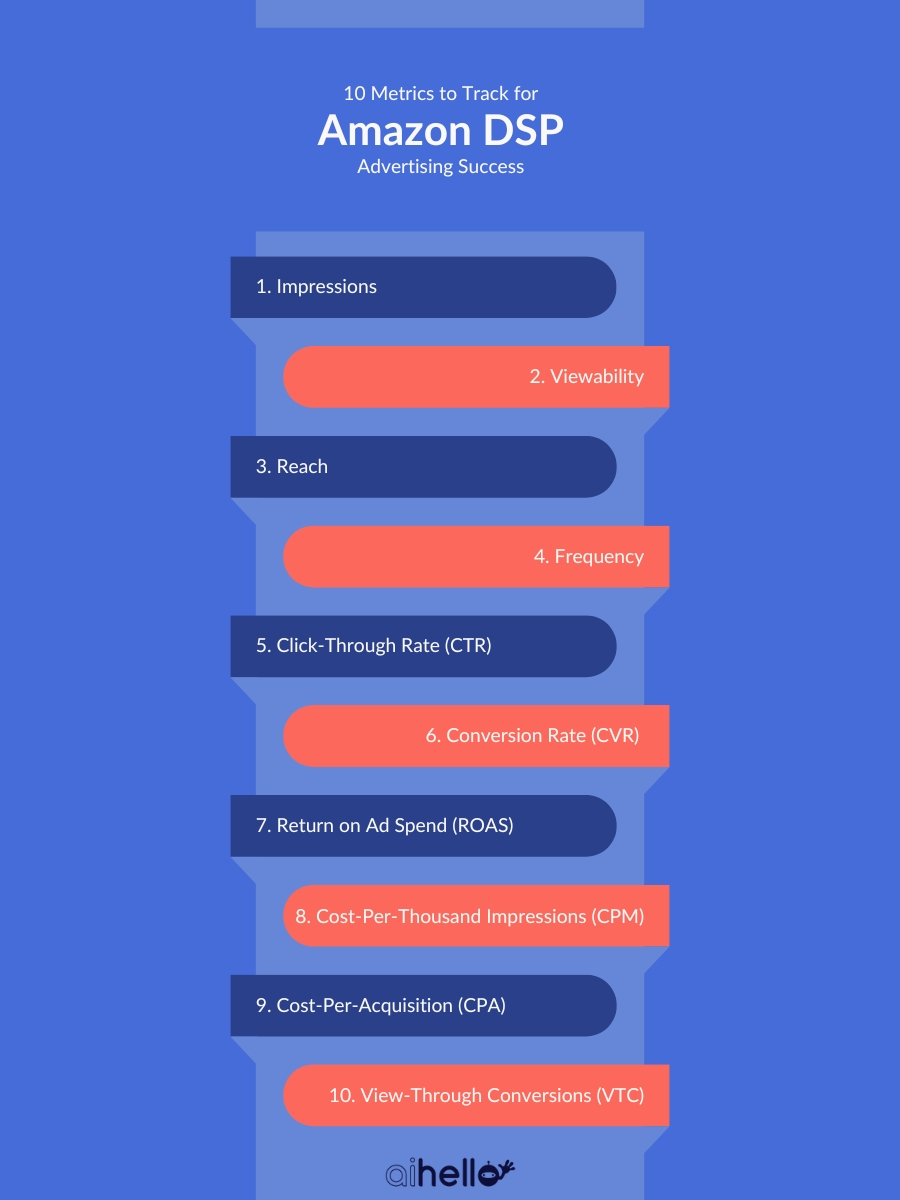
To test effectiveness, pause your DSP campaigns temporarily to see if sales drop; if they remain the same, you may need to cut down on your DSP ad spend or review your strategy.
Focusing on Brand Keywords4
If your PPC campaigns are mainly targeting keywords related to your brand, your TACoS will look really good but you won’t drive any incremental revenue.
Generic, or non-branded keywords will always run at 1.5-2x the ACoS of branded ones, which might make some sellers reluctant to use them, especially when the search volume of branded keywords is good. But in reality, advertising on generic keywords can do wonders for your product.
The search volume on generic keywords is likely 20-30x what you have with branded ones which means you can make a lot more sales through them.
Automate Your Reporting Process1
Instead of manually pulling data from multiple sources, you can set up automated queries in AMC to regularly extract the metrics that matter most to your business.
This means you can automate reports on key performance indicators like conversion rates, ACoS, or customer acquisition costs.