

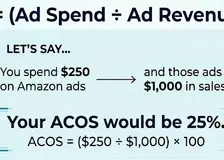
A profitable campaign might have an ACOS of 35% if its margins are 50%, while another at 20% could actually lose money if margins are thin.1
Break-Even ACOS: The Number Every Amazon Seller Should Know2
Let’s assume two Amazon sellers, both running PPC campaigns with a 30% ACOS. One is making a good profit, while the other is losing money. The difference is clear.
It’s the Break-Even ACOS. It shows the maximum advertising cost your business can afford before your campaigns start to lose.
As long as your ACOS stays below this number, your ads will generate profit. Once it goes above your break-even point, it will start eating into your margins.
This is why seasoned Amazon sellers don’t rely on industry benchmarks alone. Before adjusting bids or pausing campaigns, they first understand how much ACOS can impact their business
What is the product profit margin? How do we calculate it?3
The profit margin or gross profit margin for a single product is the ratio of profit to revenue. Profit can be defined as the value of a sale minus the cost of manufacturing the item sold.
Product Profit Margin% = ((Sales value – Costs Involved) / Sales value) 100
If you sell a product for $200 and your costs per unit are $120, your profit margin is ((200-120)/200)*100 = 40%.
We can calculate the break-even point for ACoS and RoAS now that we have the product profit margin.
Break-Even ACOS Formula2
Break even ACOS = Profit margin before ad spend
Common Mistakes to Avoid
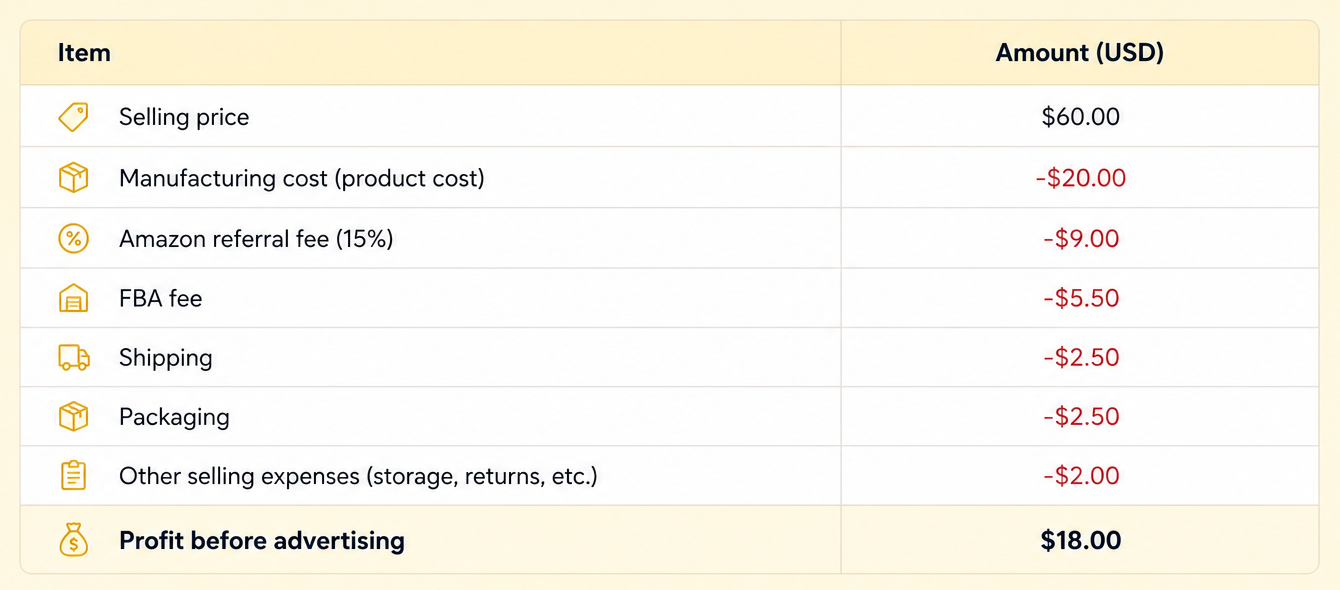
Many sellers wrongly calculate their Break-Even ACOS because they skip to include all of their costs. Before calculating your profit margin, make sure you’ve calculated
- Amazon referral and FBA fees.
- Shipping, storage, and packaging costs.
- Coupons, discounts, and promotional offers.
- Product returns and other operational expenses.
A well calculated Break-Even ACOS gives you a stronger benchmark than any industry average.
Once you know your number, you can decide whether to run campaigns for profit or intentionally accept a higher ACOS to support growth.
Let’s clarify the math1
The smarter frame: Set ACOS targets by SKU lifecycle, not by an arbitrary global number.
AiHello aligns perfectly with this reality. AutoPilot optimises toward effective ROAS (profit-weighted) rather than rigid ACOS, automatically scaling bids up or down based on conversion strength, not vanity metrics. It breaks ACOS rules intelligently when margin compression or growth potential demand it.
ACOS and TACOS Benchmarks: What Good Looks Like at Different Growth Stages4
There is no universal ACOS or TACOS target that works for every Amazon seller and business. A lot of factors actually impact the numbers of TACOS and ACOs.
The average benchmark of each category depends on product margin, categories, competition, and the growth stage of each product.
ACOS and TACOS are influenced by various factors and it also tells you why you should not draw a conclusion with a single metric. Let’s look at some of them which impacts both the metrics
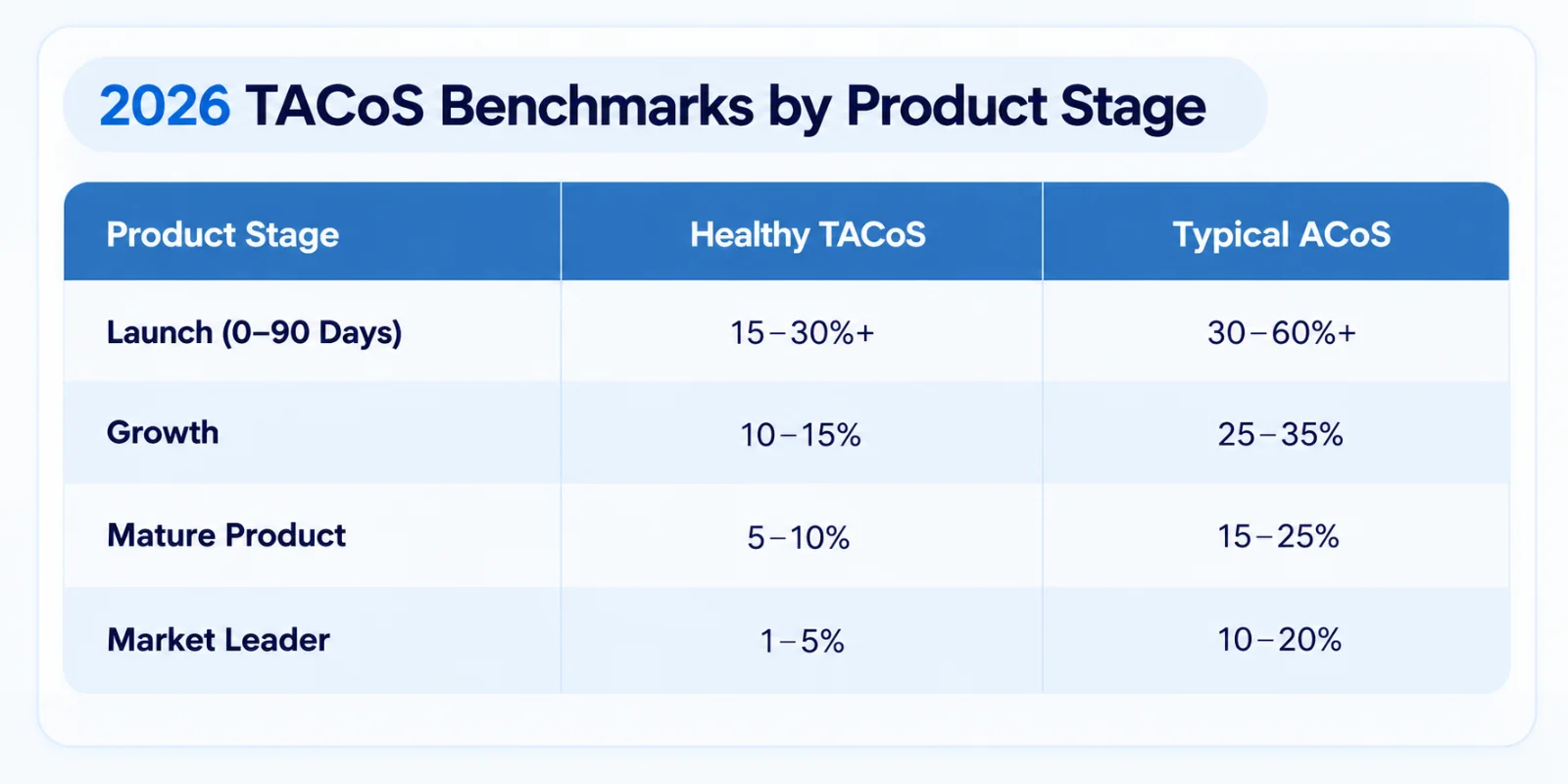
New Product Launches
During the launch of a product, higher ACOs can be expected as you’ll be investing more to create visibility and you’ll be spending more to generate sales. In that case ACOs will tend to be at a higher level.
Sustainable & Established Brands: What Stable ACOS Actually Means5
Most established products stabilize around 25–50% ACOS, while TACoS generally remains under 15%, reflecting the combined effect of paid and organic sales.
This stability occurs because campaigns have already completed their initial learning and refinement cycle. Conversion rates improve as your listing gains trust, your keyword base becomes more focused, and your competitors fluctuate less dramatically.
A key reason established brands enjoy stable ACOS is that campaign optimization compounds over time. As the account matures, irrelevant traffic gets filtered out, strong keywords rise, seasonality becomes predictable, and each dollar spent contributes more effectively to generating sales.
Performance at this stage is shaped by factors like pricing, competition level, the strength of your reviews, and seasonal demand.