

Once the initial setup is complete, AutoPilot begins analysing your campaigns and gradually increases the depth of automation based on performance patterns.1
Quick Start with AiHello AutoPilot1
Getting started with AutoPilot is simple, but following the correct activation flow ensures the automation learns properly from day one. The goal is to give the system clean data, clear performance boundaries, and enough structure to make intelligent bid and keyword decisions right from the start.
7-Step Activation Checklist
- Connect Amazon Seller Central to sync all live campaigns
- Verify campaign types, portfolios, and ASIN mappings are imported correctly
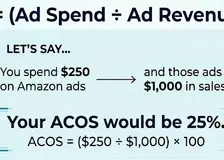
- Set ACOS goals for each product or group
- Define minimum and maximum bid limits
- Set daily budgets for stable pacing
- Enable key modules: bid automation, keyword automation, placement optimization, dayparting
- Begin the four-week ramp-up and monitor weekly summaries
- Week 1: The system observes your campaign behaviour and identifies patterns of high-converting keywords, weak placements, and periods of overspending. Changes are light during this phase.
- Week 2: AutoPilot becomes more active. It begins adjusting bids more frequently, promoting converting search terms, and adding negatives to stop recurring waste.
- Week 3: Advanced controls, such as dayparting and placement optimization, kick in. Spend is distributed more efficiently throughout the day, and high-performing placements receive calculated boosts.
- Week 4: Performance stabilizes. Most unnecessary spend is cleaned up, keyword targeting becomes sharper, and ACOS trends begin to improve steadily.
How long does it take to see results?
Most sellers begin to see cleaner spending and reduced waste within the first 10–14 days. Clear ACOS improvements usually appear by Week 3 or Week 4, once the system finishes the learning phase and begins applying stronger optimisations, such as dayparting, placement boosts, and aggressive negative keyword pruning.
Systematic Test Cadence2
Full-service agencies run perpetual testing cycles, launching A/B experiments on bids, creatives, and match types weekly to identify winners. They use “waterfall keyword migration,” testing broad/phrase autos for 4-6 weeks before promoting high-performers to exact-match with aggressive bids. Gold panning campaigns low-bid broad nets test loosely relevant terms at scale, adding $35k+ sales at 14% ACoS in real cases.
Daily checks handle intraday patterns via Amazon Marketing Stream, with bi-weekly reviews, tweaking for statistical significance. Quarterly full audits benchmark against break-even ACoS, prioritising top/revenue drivers.
AiHello’s AutoPilot embodies this cadence automatically: AI analyses hourly data to harvest keywords from autos, transfers converters (e.g., 1+ sales) to manuals, and runs A/B bid tests daily toward your ACoS target. No manual scheduling set once; dayparts bids by peak hours, replicates waterfall logic, and iterates like an agency team.
Start With Setting The Right Goals3
For effective reporting, approach your Amazon reports with your strategic purpose in mind. Do you want to boost your revenue? Are you aiming to raise awareness?
Whatever your goal is, write it down before you begin studying your reports and keep it visible at all times. This allows you to have a consistent perspective when looking at your metrics. Furthermore, this offers you an excellent indication of how realistic your goals are.
Keeping your aim in mind also allows you to make sound judgments about your measurements. If you’re getting closer to your objective over time, you know your performance is adequate for what you’re aiming for.
Trend Analysis
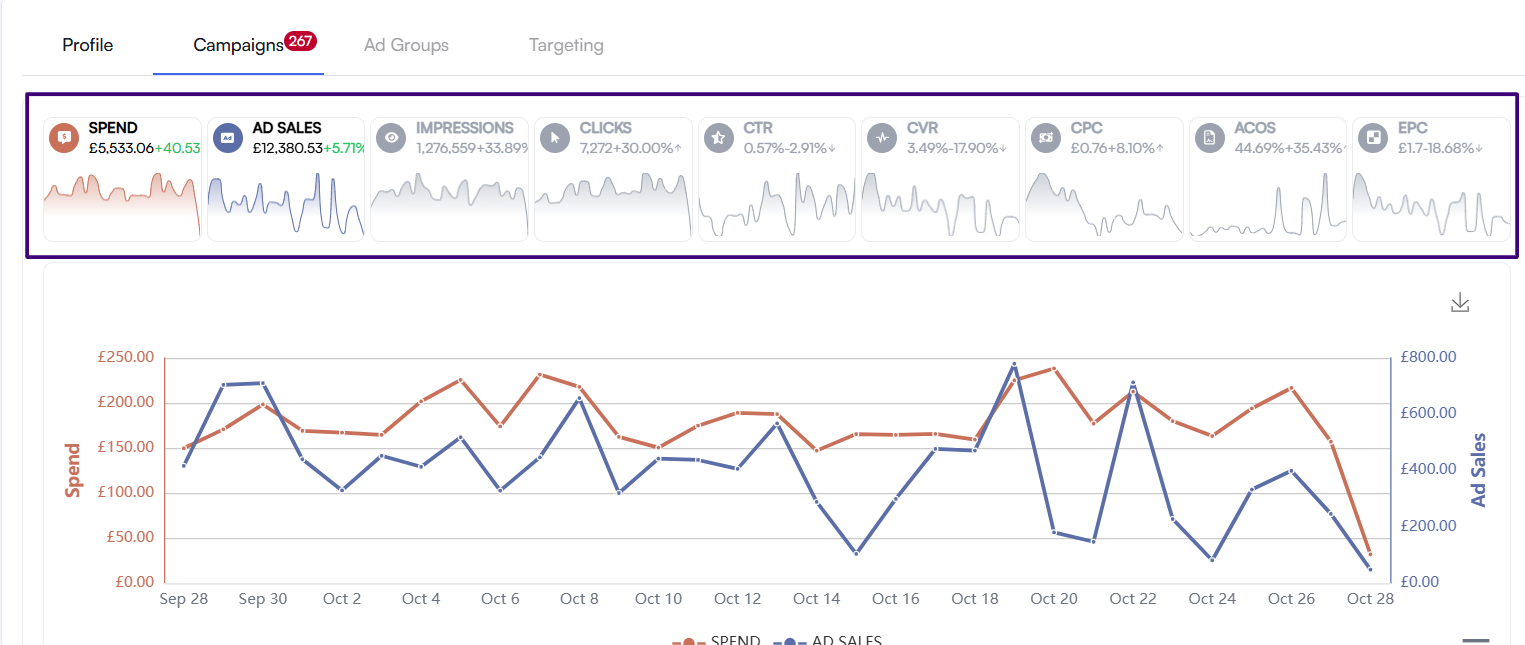
You can’t make informed optimization decisions for your campaigns moving ahead until you have a thorough understanding of previous cycles and trends.
What Scaling Looks Like When It’s Working4
When scaling is done correctly, performance stops feeling chaotic. ACOS no longer swings wildly from day to day, and spend doesn’t jump unpredictably based on fear or urgency. Instead, growth feels controlled and deliberate, with campaigns responding smoothly to demand rather than overreacting to short-term noise.
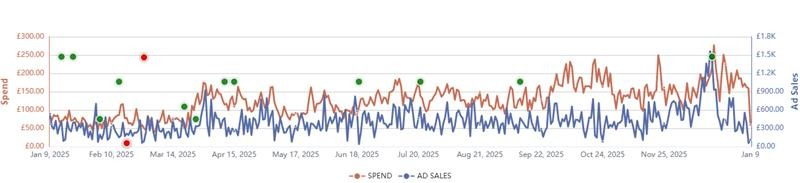
Spend increases gradually and consistently, supported by data rather than guesswork. As budgets grow, optimization becomes quieter instead of louder.